 Santa Cruz Mountain Photography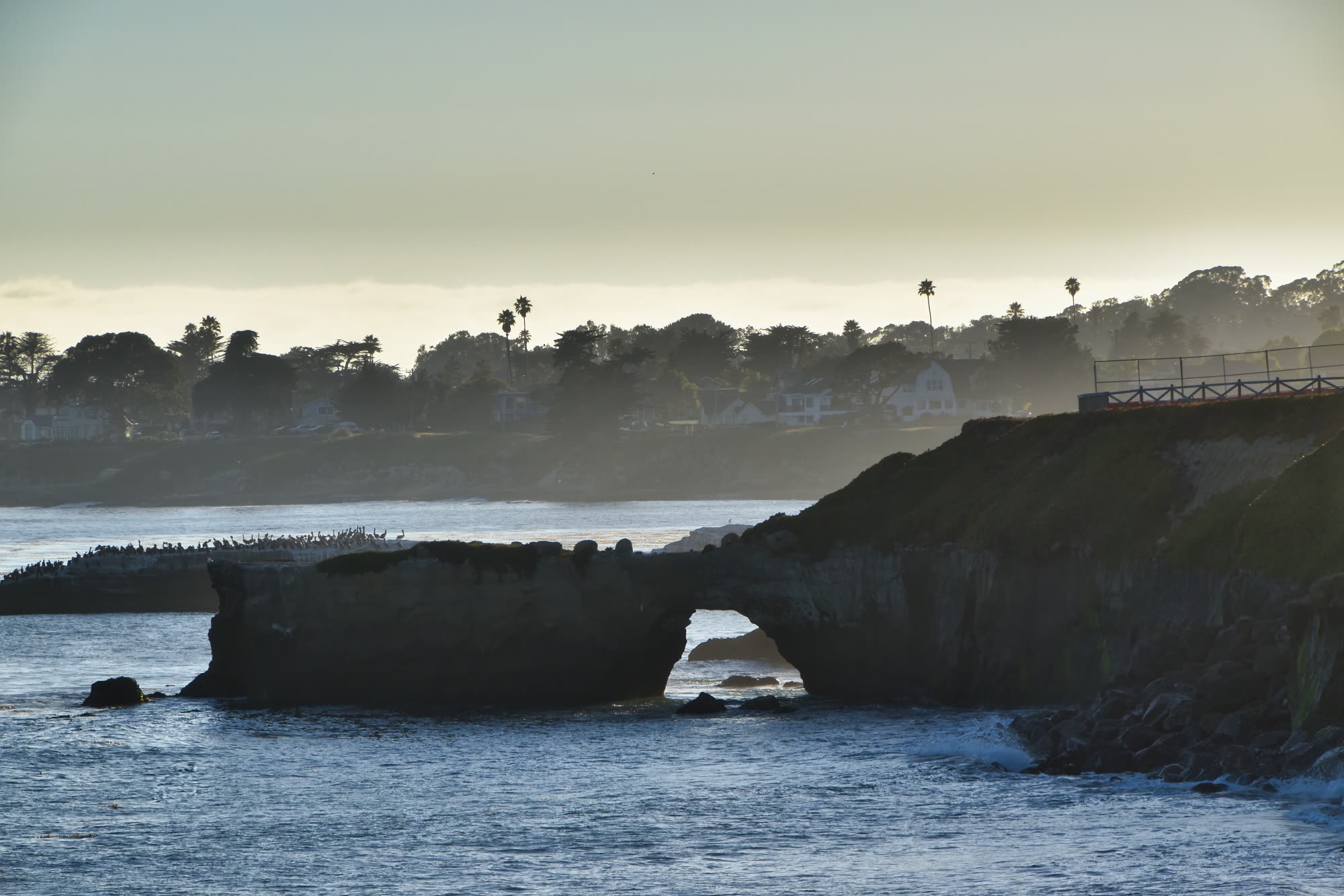
Natural Bridges is one of those places that photographs well almost by accident. Point a camera at the arch and you'll get something decent even on a bad day. But there's a real difference between a decent shot and the shot the place is actually capable of, and it comes down to knowing what to wait for.
The arch itself
There's only one bridge left standing now (the park's name is a bit of a relic: erosion has taken the others over the decades), but it's the whole reason to come. Shoot it straight-on from the main overlook for the classic, symmetrical version, or walk down onto the sand and shoot from an angle where the arch frames something behind it: the horizon, a wave breaking, the sunset itself if you time it right. The opening faces roughly the right direction to catch late sun through it for a few weeks around the equinoxes; outside that window, you're shooting the arch lit from the side rather than through it, which is still good, just different.
Low tide is when this place opens up
Check a tide chart before you go. At low tide, the reef in front of the beach exposes tide pools full of anemones, crabs, and the occasional starfish, and you can walk out onto rock that's normally underwater. This is genuinely one of the better tide pool spots on this stretch of coast, and almost nobody photographs it well because they show up at high tide when there's nothing to see but water against the cliff.
The monarch grove
Less obvious, and easy to miss if you only go for the beach: there's a eucalyptus grove just up from the parking lot that hosts an overwintering monarch butterfly colony, roughly October through February. On a warm, sunny day in season, the trees can be genuinely thick with them. It's a completely different kind of shot from the coastal stuff: quieter, more macro, worth the short walk even if butterflies aren't usually your subject.
Practical notes
Parking fills up fast on weekends, especially around sunset. This is a small state beach with a small lot, and it's popular for good reason. Go on a weekday if you can, or get there with real time to spare. And plan to leave after the show fully ends: the color often builds for a good ten minutes after the sun's actually down.
If you're planning a shoot here, portraits with the arch as a backdrop, or aerial coverage of the whole reef and the coastline around it, reach out and I can help plan around the tide and the light.