 Santa Cruz Mountain Photography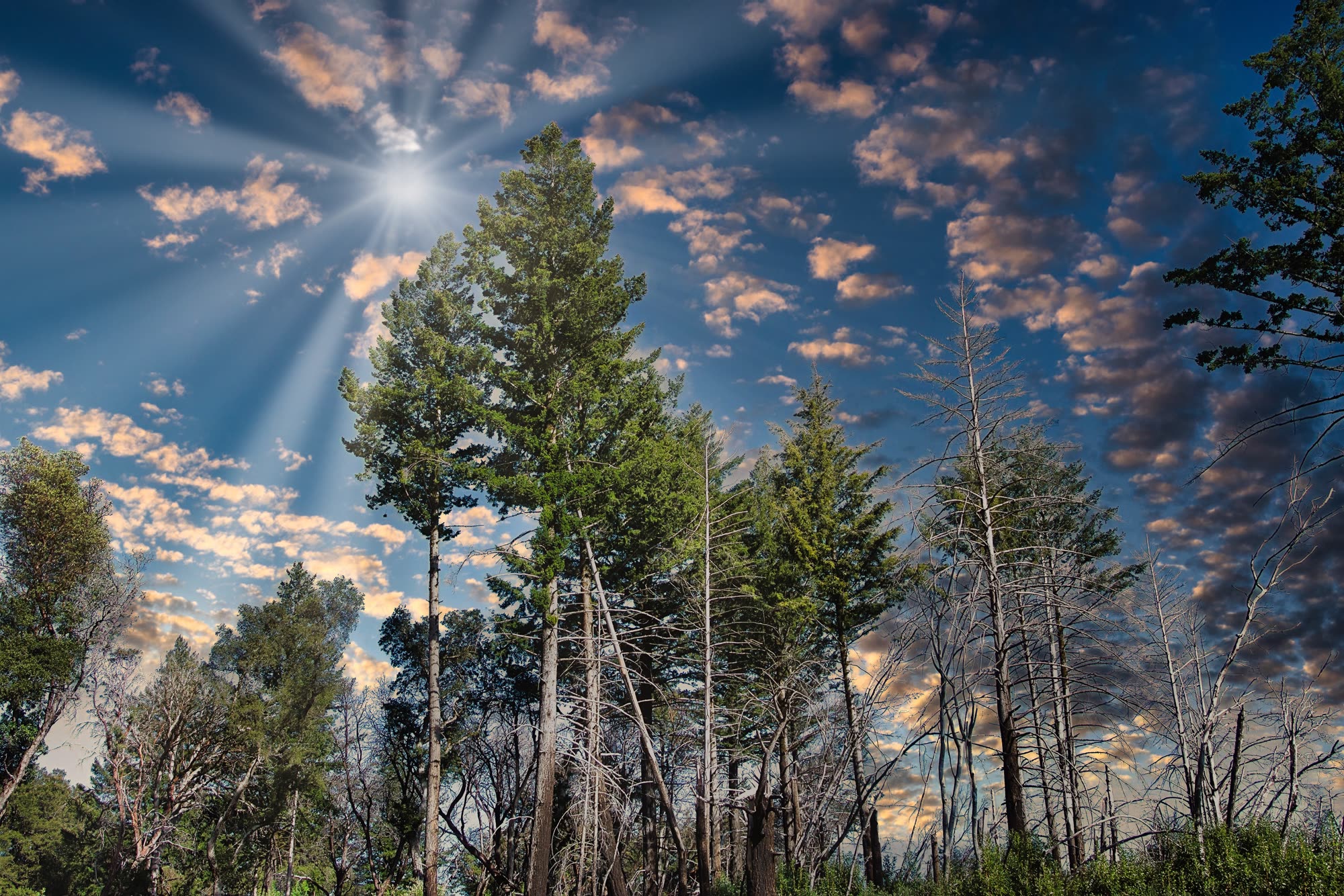
Big Basin was the oldest state park in California, and in August 2020 the CZU Lightning Complex fire burned through nearly all of it. The park was closed for years afterward, and even now that parts of it have reopened, it doesn't look like the Big Basin most of us grew up with. I've spent a fair amount of time out there since with a camera, and it's worth talking honestly about what you'll actually find if you go.
The old-growth redwoods mostly survived
This is the part that surprises people: coast redwoods are remarkably fire-adapted, and most of the park's ancient trees, some over a thousand years old, are still standing and, in many cases, already resprouting green growth straight out of blackened bark. It's a strange, striking thing to photograph: a trunk that's clearly been through an intense fire, with bright new foliage sprouting directly from the char. That contrast, more than anything, is the story of this park right now.
The understory is a different story
Most of the smaller trees, brush, and forest floor burned completely, which means a lot of the park reads as much more open and exposed than it used to. You can see much further into the forest than you could before 2020, with standing dead trees (snags) scattered through it. It's not the deep, dark, enclosed redwood forest people expect. It's something rawer, and depending on your eye, either less beautiful or more interesting than the original. I lean toward the latter, especially at golden hour when low light rakes through gaps in the canopy that didn't used to exist.
Access is still limited
Large sections of the park remain closed or day-use only as infrastructure gets rebuilt, and trail conditions change as recovery work continues. Check the state parks website for current status before you go, not an old trail map. Some of the most-photographed pre-fire spots (the old park headquarters, certain groves) may not be accessible the way they once were.
Why photograph it at all
Because this is a real, ongoing story about a place a lot of people care about, and most of the photos still circulating online are pre-fire. They don't show what's actually there now. There's value in documenting a forest recovering from a fire this severe, both for anyone who loved the old Big Basin and wants to understand what's changed, and simply as a record of how a redwood ecosystem comes back from something like this.
If you're interested in a guided shoot out there, or aerial footage of the burn scar and regrowth from above, get in touch.